
How to clean out the colon and make it healthy again
Updated: Oct 23, 2021

Is the colon actually sick??
When children are “backed up”, they can retain stool for long periods of time. This makes the colon start to stretch out. And it turns out that stretch is BAD for colons. Lots of stretch leads to two problems that are hard to fix without a really comprehensive game plan:
1. First, a stretched out colon makes that colon unable to send strong messages to the brain when it’s time to go. The message is weaker or sometimes non-existent. So children stop getting a strong prompt to try to let it out. This obviously makes the problem even worse.
It all starts with a good strong message that goes something like this:
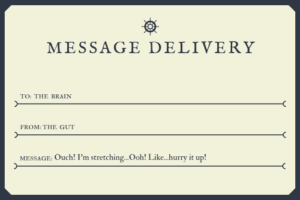
For the geeks out there, “stretch receptors” line the colon wall. When the colon fills up with stool, the wall is stretched, and the receptors fire. These receptors are responsible for “telling you” when it’s time to poop. When they fire, they “sound the alarm” to the brain.

When stool is retained too long, like in constipation, the stretch receptors just fatigue from over-firing. Once fatigued, the receptors stop doing working. In some children the message is just weak. In others, there is no message at all.
Once the message has been muted, your child won’t get those body cues that prompt a child to go to the bathroom.
If your child is not getting the message ‘to go,’ assume that the colon has been stretched out for far too long.
That colon is sick and needs to heal.
Here’s the great news. You can fix a stretched out colon.
2. Second, a stretched out colon makes weaker contractions. The lighter the squeeze, the less easily the poop comes out. And that…well, that just makes you EVEN MORE backed up.
A vicious cycle for sure.
Your colon must generate a strong enough contraction that the poop is squeezed out—almost like what happens when you squeeze a tube of tooth paste. If you have a strong squeeze, you can get 100% of your poop out.

What it would be like if you always retained 10% of your stool on a day to day basis? Do the math. You would gradually stretch out your bowels to the point that you lose the urge ’to go’.
It turns out that that strength of that squeeze is directly tied to how stretched out the bowels are. When the colon is really stretched out from excess stool, it starts acting like an old sock that barely fits you anymore. It has lost its elasticity and its form. It stops contracting and squeezing well.

The good news is, unlike a sock, which will never regain its snap and elasticity, the colon can regain its un-stretched, healthy shape with time and the right treatments. That colon will start sending messages to the brain once more. That colon will start squeezing once more. It just takes time and the right strategy.
One of the mainstays to helping to get the colon to squeeze better is to use medications that help the colon contract. These are often referred to as stimulant laxatives. See our guide to stimulant laxatives here.
So, your “plumbing plan” should be designed specifically around making sure that we heal that colon.
Oh yes, it heals! I promise.
But it takes time. Months.
Think about trying to “rehab” the colon and that rehab requires time…almost like a knee…You have to work at it.
When I describe this to families, this is usually when the light bulb goes off: “So that’s why laxatives didn’t fix her! We only used them for a couple of weeks. We should have optimized the medications and kept using them for longer”.
For some, this will feel encouraging. For others, this will feel really daunting.
Luckily, the recipe for healing the colon is easy to remember:
EMPTY THE COLON
KEEP THE COLON EMPTY FOR AT LEAST 6 MONTHS
Let’s break this down because there is a lot to unpack.
1. Empty all the poop out of the colon:
The first step in healing the colon is getting that colon nice and empty. Then, and only then, your colon can begin the healing process.
This phase of the plumbing plan is what most doctors refer to as a “clean-out”. This is the process of emptying the colon of all of its fecal contents. This requires medication to move all that poop out. We are going to talk specific medications in a second. But your first step is to make sure you’re starting with a clean slate…er….colon.
2. Keep the colon as empty as possible for around six months:
After a cleanout, your child’s colon should be nice and empty. However this doesn’t make you “unconstipated”. Remember, that colon is still not fully healthy. It needs time to heal. So if you were to stop medications after a cleanout, most likely your child would just go back to being constipated again.
So typically, a child will need to stay on regular medication to keep that poop coming out every single day. If your colon is allowed to stay decompressed for roughly six months, it will shrink back down and it will heal. This healing is also known as “remodeling”. This is what a bone does when it is broken, sitting in a cast, trying to heal. The point is that the body knows how to heal itself if you keep it in the right position.
Plumbing Medications
Let’s talk medications! You need medications to accomplish your plumbing plan. And typically need two in your arsenal.
First, you need a poop softener. These medications, known as osmotics add water in to poop. Read all about osmotics here.
Second, you need a medication to squeeze or contract the colon to help push poop out. These medications are known as stimulant laxatives. Read about stimulant laxatives here.
As the colon heals, you will want to verify that the message to the brain is getting stronger. And you’ll want to know that the colon is generating nice strong contractions.
So how do you do this? How do you “verify” that things are getting better? In other words, how do you know if you are keeping your child’s colon empty?
The majority of parents can learn to read how empty or how backed up their child really is. Without an XRAY!
While pediatric gastroenterologists are trained in the art of poop detection, I have found that parents, with the right coaching, are perfectly capable of figuring out how backed up and dysfunctional that colon really is. It’s just another skillset.
This skill, of “reading” how sick or healthy the colon is acting, is an essential tool in helping your child with pooping problems. It gives you the data to decide how much medication to use and for what duration of time. It allows you to know how much progress you have made overall—or whether you are going in the wrong direction.
Remember, this healing takes time.
Assessing how backed up the colon is just requires answering a few questions on a semi-regular basis. So consider this like a “dashboard” of continuous data that you can use to make decisions.
How sick is your child’s colon?
I coach parents on five questions that best assess the functionality of that colon. Ask these questions on a semi-regular basis and you should almost always be able to gauge how much progress you are making.
1. Does your child get a clear message signaling that it’s time “to go”?
If this message from colon to brain is blunted or absent, then your child probably has a stretched out colon that is full of stool. Once you are able to get that colon back in to its normal shape and caliber, your child will start feeling the urge to go again. The coolest moment for many families is when their child drags them out of the checkout line at the grocery store because they “have to go now!!”
A child receiving weak messages will act in one of a few ways:
They will never try to sit on the toilet. (Why would you try to sit if you don’t feel the urge to go?)
They realize at the last possible second that poop is coming…and then it’s AN EMERGENCY and an all out sprint to the bathroom!
When they have poop accidents, they often do not even feel the accident happening.
2. How much time does the poop process take?
Does it take 5 minutes to get the poop out or 30 minutes? The longer it takes to complete the job, the less squeezing that colon may be doing. Lengthy pooping times suggest a full/stretched out colon. You, dear reader, know what it feels like when the colon is contracting efficiently. You feel the urge ‘to go’. You head to the bathroom. You’re in. You’re out. 5-10 minutes tops. You feel empty and fully relieved. You feel like a “new person”. However with a stretched out colon, you may feel like you need to take extra time to work on it.
3. How much comes out?
An incomplete, or wimpy poop means that the colon is not squeezing very well. For an adult, it would feel disappointing…like “there’s more in there”. It almost doesn’t matter how long you sit. It’s just not wanting to come. This definitely suggests that the colon is stretching too much.
4. How frequently does your child go?
It doesn’t take a medical degree to understand that if your child is pooping once per week, there is probably retained stool and it needs to be addressed. But on the other end of the spectrum, some children go very frequently when really constipated. The child that has four wimpy poops per day is not getting efficient squeezes. Their colon is taking 4 tries to do the same job that most of us can do in 1-2 tries. These wimpy squeezes are coming from chronic constipation. This is often a big fake out for families. They are often bewildered at the idea that their child has constipation even though their child seems to always be pooping!
5. Pee or poop accidents? How frequent and voluminous are the accidents?
With poop accidents, the reason for accidents is “overflow”. There’s just no where else for the poop to go but out the bottom (the path of least resistance). It’s literally just too full down there. When they have poop accidents, there’s typically little to NO SENSATION AT ALL that the accidents are happening. They didn’t even realize that they had ’to go’. Parents, if you child falls into this category, hopefully it’s obvious that the accidents are not their fault.
With pee accidents, often the excess poop is pushing up against the bladder. This added pressure against the bladder leads to increases in both daytime, and night time accidents.
So, to summarize:
1. A comprehensive plumbing plan involves taking care to fully rehabilitate the function of the colon.
2. It involves getting it nice and empty and keeping it empty in a sustained way for many months.
3. Lastly, a complete plan will include not only a plumbing plan but a behavioral plan as well, to improve brain-gut relationships. More on your behavioral plan coming soon!
The obvious disclaimer here is that this skill of reading the colon is not a substitute for medical advice or medical care. If you are concerned about your child, start with a call to your doctor. You definitely should start your “reading” by ensuring that your child does not have a fecal impaction. An impaction is like a blockage, with poop stuck in the rectum. Impacted children typically have big distended bellies, they are always uncomfortable, they may not eat much, and they can occasionally vomit. Generally, impacted children have mostly stopped pooping—almost like they have a real blockage. An impaction needs to be addressed urgently and often involves enemas to get the blockage unstuck. If you aren’t certain, I always endorse having a medical professional examine your child before embarking on this constipation journey.


Comments